
A child cannot calm down next to an adult who can’t.
Your teachers manage other people’s emotions all day. Nobody ever trained them to manage their own. That is the gap — and it is the reason most SEL programmes do not change anything.
TRISEL closes it. One day, in your school, HRD Corp claimable.
CASEL-aligned · ICF-accredited facilitators · HRD Corp Registered Training Provider
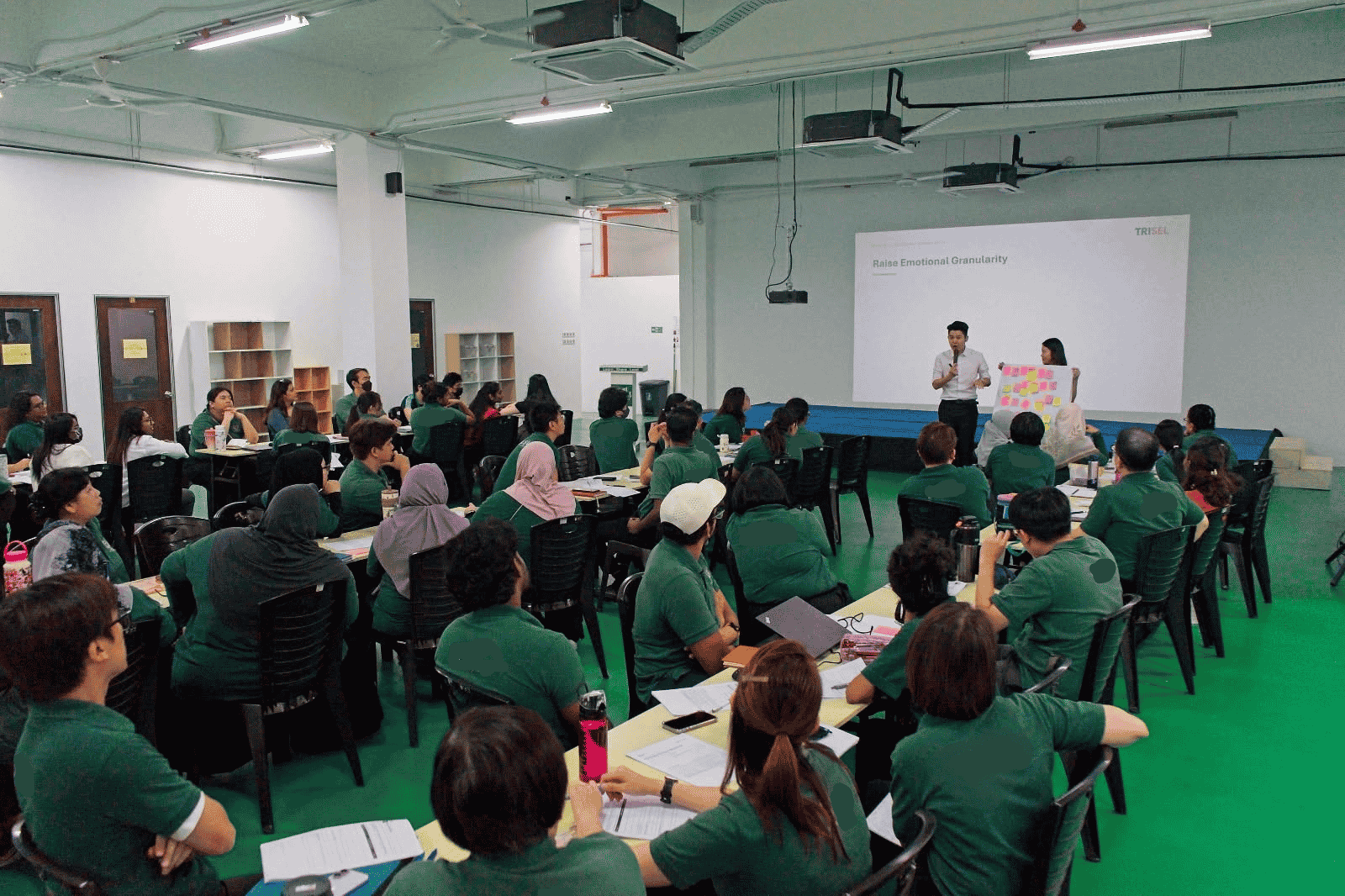
Adult SEL training, Klang Valley, August 2026.
You already have the problem. It just does not have a name yet.
Picture the moment. It is two o’clock. It is the fourth incident of the day. A parent’s message from this morning is still unanswered. A child has just talked back, and the first thought that arrives is this child has no respect for me — before your teacher has had one second to choose a different one.
She has been trained in curriculum, in assessment, in classroom management. She has never been trained for that second.
It shows up in three ways you are probably already seeing.
Your best teachers are the ones who leave
It is rarely the weakest teacher who resigns. It is the one parents requested, the one who stayed back with the difficult child, the one who absorbed everything without complaining — until she could not. She will cite salary, because that is the reason that does not require a difficult conversation.
The same incidents keep happening
A child melts down. A teacher responds. Next week the same child, the same teacher, the same outcome. Not because anyone is careless, but because nobody has a shared method, so every teacher improvises alone.
Parents get a different answer depending on who they reach
One teacher apologises. Another explains policy. A third escalates to you. To a parent that is not three staff members. That is one school that cannot decide what it thinks.
Most schools have already tried the wellbeing day.
A speaker comes in. There is food, some laughing, a few teary moments. Staff leave feeling seen. Someone posts the photos.
By Wednesday, everyone is exactly where they were on Friday.
Not because the speaker was bad, but because a wellbeing day is an emotional event, and what teachers need is an emotional skill. Inspiration fades on a predictable curve. Under pressure, people do not perform what they agree with. They perform what they have practised.
A teacher who has heard about regulation will not regulate at the fourth incident of the day. A teacher who has drilled it, will.
What happened when we ran this for 66 staff
90%
rated the day valuable or highly valuable
89%
response rate — 59 of 66 staff
88%
said they could apply the tools in class
73%
scored top marks on every application question
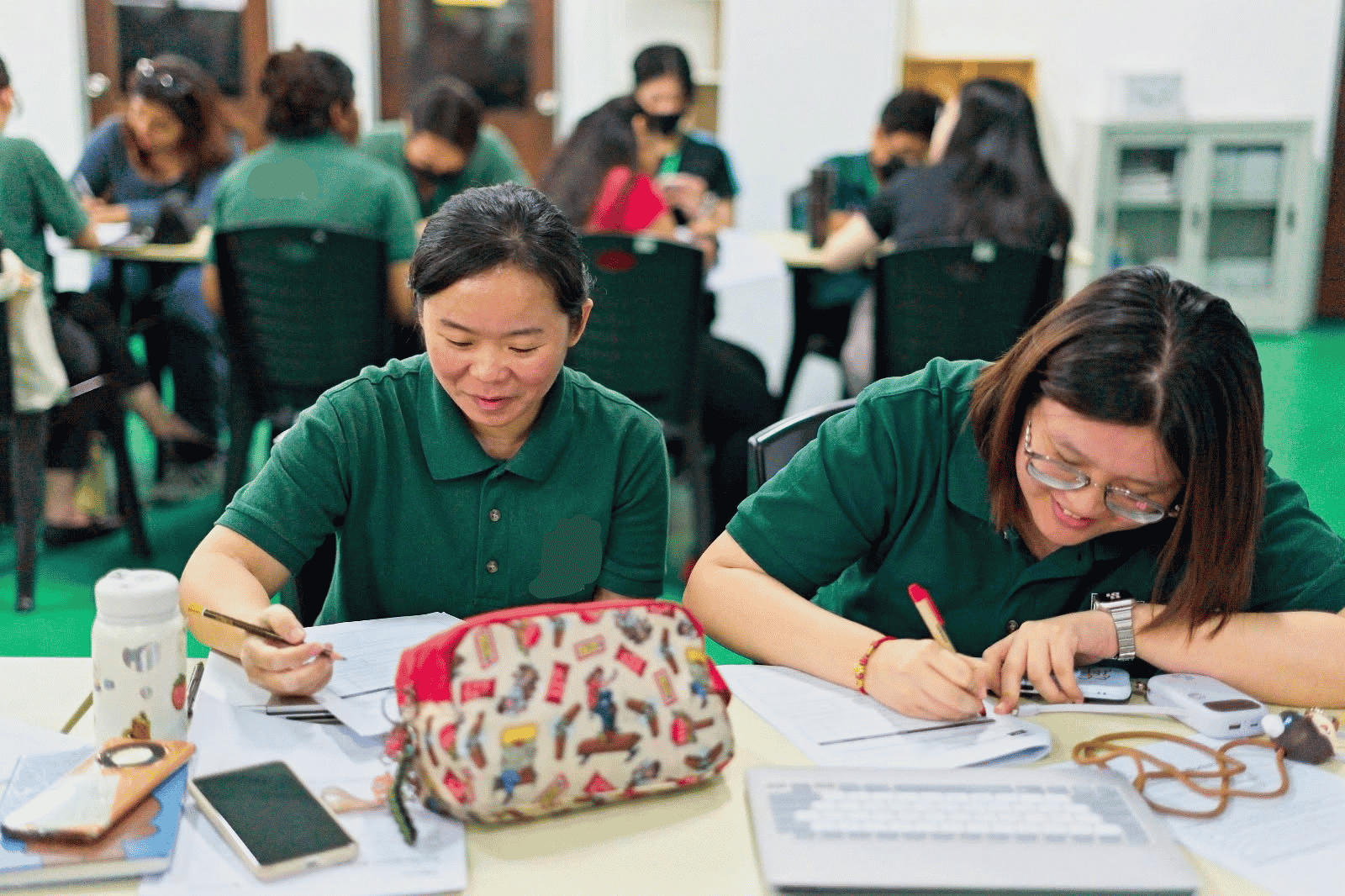
Most of the day was spent in pairs. Several staff named working through real situations with a colleague as the single most valuable part.
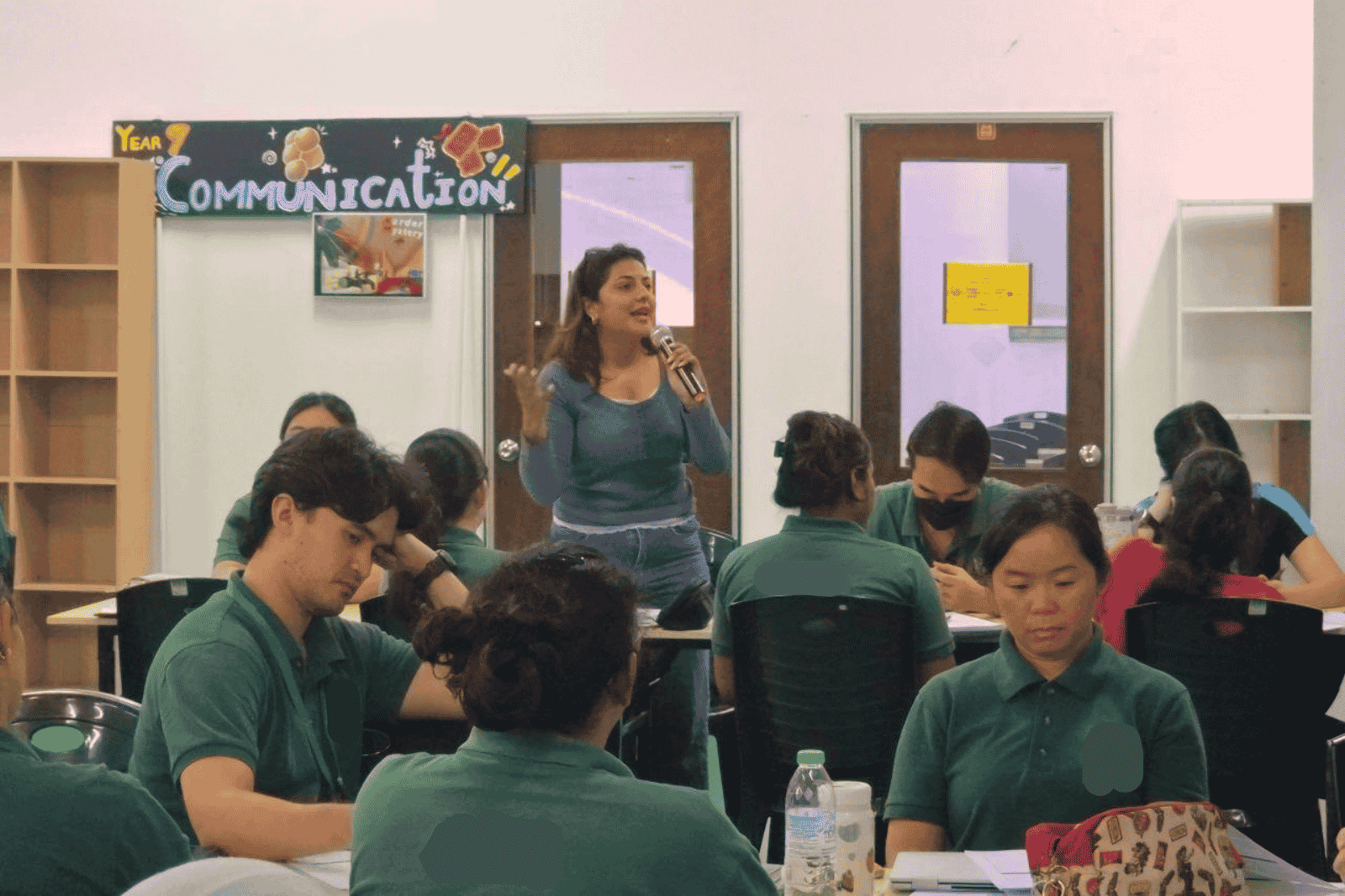
A staff member sharing back to the room. By mid-morning, people were volunteering their own examples without being asked.
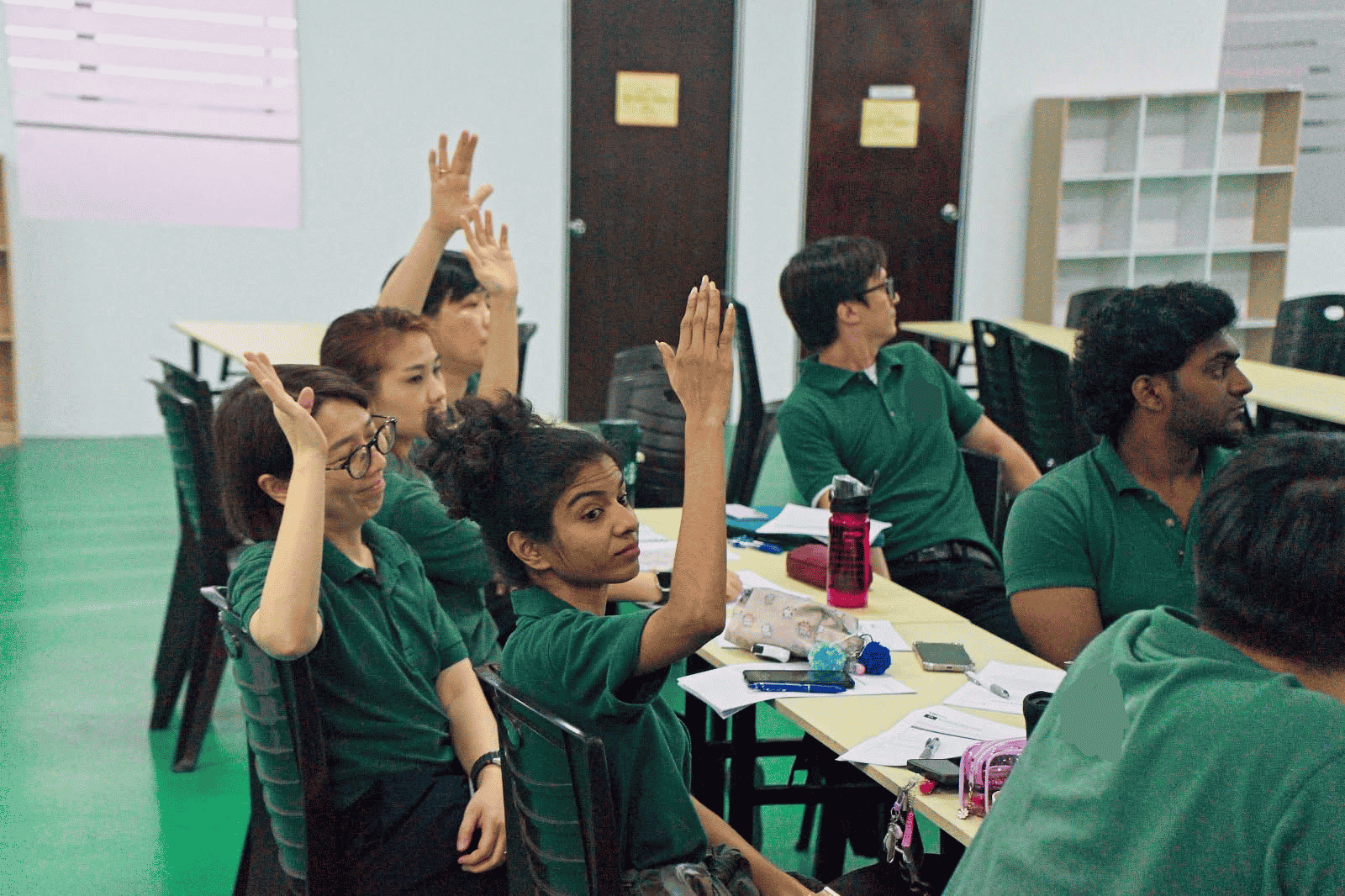
Compulsory attendance, on a working day, for a full day. 42 out of 59 responses asked for more learning and practice time.
“There are techniques to handle difficult students — not just scolding them.”
Participating teacher
The number that surprised us was in the improvement box. 36% said there was nothing to improve. Of those who did suggest something, 71% asked for more — more scenarios, more role play, more practice time. Only 4 of 59 asked for the day to be shorter.
An international school in the Klang Valley, August 2026. Participant response data, n = 59.
One day. Five modules. Built on CASEL Focus Area 2.
01 Emotional Granularity
Naming what you feel with precision, and why vague feelings are harder to manage than specific ones.
02 The Emotional Management Journey
Where the gap between trigger and reaction actually sits, and how to widen it.
03 Three Keys to Regulation
Noticing early, regulating the body, and shifting perspective before responding.
04 The EEG Technique
Ease, Empathize, Guide. The three-step sequence for the moment a child is dysregulated. Named most useful by 34% of participants.
05 Perspective Shifting (Purposeful Reframing)
Changing the interpretation that generates the emotion in the first place.
Practised, not presented. Staff leave with tools they have rehearsed, not notes they will file.
What changes — and in what order
Adults first, then the room, then the children. Skip a step and the next one does not happen.
First · Your teachers
The next morning, she can:
- Notice the temperature rising before her voice does
- Name what she is feeling in a word more useful than “stressed”
- Settle the child first, understand second, correct third
- Ask what happened before fixing problems
- Say no to one more thing without feeling guilty about it
85% felt more confident managing their emotions. 81% could pause and respond on purpose.
Then · Your staff room
Within a term, you notice:
- A bad Monday stops turning into a bad week
- Parents get the same answer whoever they reach
- A complaint turns into something you can actually fix
- Teachers raise it early instead of carrying it home
- Your office stops being the first stop for every incident
- “I lost my patience today” becomes a sentence someone can say out loud
Eventually · Your students
Children copy the adult in front of them, not the poster on the wall.
- They borrow calm from a calm adult, again and again, until it is theirs
- A child cannot settle next to someone who has not settled first
- Which is why the adults go first, not second
What the research shows
213 school programmes. 270,034 students. Students in well-implemented programmes gained:
+11
percentile points in academic results
+10
points in helpful classroom behaviour
−10
points in disruption and conflict
Which number came from where: the teacher figures are our own participants, at the end of the day. The student figures are from the published research, not from one day of adult training.
One day starts the shift. A term of practice is what makes it a culture.
Durlak, Weissberg, Dymnicki, Taylor & Schellinger, Child Development, 2011.
Who delivers it
Every programme is led by an HRD Corp accredited trainer holding SEL-specific certification — not a generalist who added SEL to a slide deck.

Coach KC Chin
Founder & CEO · Lead Trainer
13 years designing and delivering training and coaching programmes for children, parents and education professionals. He has facilitated groups of 60 to 120 participants across international schools, private schools, premium early-years centres and multinational corporate clients.
- Associate Certified Coach (ACC), International Coaching Federation
- Leading Schoolwide SEL Implementation, CASEL
- Certified Positive Intelligence Coach (CPQC)
- SEL Foundation Teacher Certification, CommonWealth Parenting, Taiwan
- Certified NLP Practitioner (NFNLP)
- HRD Corp Accredited Trainer, valid to April 2029

Coach Mei Yi
Co-founder · Head of Curriculum, Training & Certification
Leads curriculum design and teacher certification across both the Academy and TRISEL. She has spent 12 years working directly with children and the adults who teach them, and writes every module that reaches a classroom.
- Bachelor of Psychology
- Certified NLP Practitioner (NFNLP)
- Certified Kids'Skills Practitioner
Accreditations held
International Coaching Federation · CASEL · Positive Intelligence · HRD Corp Accredited Trainer · NFNLP
Most SEL providers have never run a classroom. We run one every week.
Before TRISEL existed, we built SUPER Avatar Academy — a centre-based social and emotional learning programme for children aged 5 to 12 in Bukit Jalil. It is still running, and it is the reason this training is not theoretical.
Every tool we teach your staff has already been tested on a Saturday morning with a real child who did not want to do it.
Acknowledgement Day, January 2025. The families whose children test every module before it reaches your staff room.

10,000+
families served since we opened
5-year
progressive curriculum, ages 5 to 12
Max 11
children per group, every session
Weekly
live testing ground for every TRISEL module
How it works
- One day, or half day, delivered at your school, or at our academy located in Bukit Jalil.
- Up to 50 participants per group — HRD Corp’s cap for in-house soft skills training. Larger staff bodies run as two groups.
- Teaching, support and leadership staff together. Leadership attending matters. In our last cohort, senior staff rated the day as highly as teachers.
- HRD Corp claimable. We are a Registered Training Provider and will support your grant application and claim.
- Post-programme summary within 7 working days — aggregate results and recommended next steps for your leadership team.
KP2027 makes SEL compulsory. Compliance and change are not the same thing.
Most schools will satisfy the requirement on paper: a documented approach, evidence of delivery, someone named as responsible.
The schools that get results will do something that appears in no circular — train the adults before teaching the children. A child cannot regulate alongside an adult who cannot.
That step is skipped almost everywhere. It is also the one that decides the outcome.
Tell us about your school
No pitch deck, no pressure. We will ask what you are dealing with and tell you honestly whether we are a fit — we have told schools before that we were not.
Or email us directly at [kc@superavatar.com.my]. We reply as soon as we can.
SUPER Avatar Education Sdn Bhd (202301050612) · 5-10-1, Aked Esplanad, Jalan Jalil Perkasa 14, Bukit Jalil, 57000 Kuala Lumpur